
Activities live inside a term, and often inside a class within that term. When your school starts a new term, or when you built activities in a personal school before your school joined Flint, the activities stay where you made them until you bring them across.
Flint gives you two tools for this:
| Import content | Duplicate activity | |
|---|---|---|
| Use it to | Bring a batch of activities in from another school or an earlier term | Copy the activity you are looking at into other classes |
| Where you start | Your Activities page, or the class you want them in | The activity's own page |
| Move or copy | Either | Copy only — the original stays put |
| What it reaches | Eligible activities you individually own in schools and terms you can access, into the term or class you started from | Classes you can edit in your current term, and the term itself |
Import activities from another school or term
Start where you want the activities to end up.
- Into your term, not a particular class: select Activities in the sidebar, then Import activities at the top of the page.
- Into one class: open the class, then select Import content at the top of the page. (The Import activities icon in the toolbar above the class's activity list opens the same dialog.)
You need Can edit access to the destination class. The source picker shows active, non-draft activities on which you have an individual Can edit role; access inherited only from a class or school is not enough. Activities already in the destination are omitted. If an activity is missing, ask its owner to add you directly.
To import activities that are inside folders, start from the destination class. The term-level import picker currently omits foldered activities.
Then work through the Import content dialog:
- Select school — choose the school you are importing from. It can be the school you are in now.
- Select term — choose the term the activities are currently in, then select Next. Terms with no eligible activities cannot be chosen. Hidden past terms do not appear unless you own the school.
- Use Import from to choose a location within the selected term. Tick the activities you want, grouped by where they live. Tick a section's box to take everything in it, or use Search activities or classes to find activities by name or summary, or find a class or folder. Select Next.
- Choose Duplicate activities or Move activities, then select Next.
- If the destination class uses grade weight categories and you individually selected activities with grading rubrics, choose their categories under Choose grade weight categories, then select Next. Activities selected as part of a whole folder are not included in this step.
- Check the list, then select Duplicate n activities or Move n activities.
- Select Done.
Check the completion results before closing. If duplication reports a failure, check the destination before importing again to avoid extra copies. An activity that did not move stays in its source location.
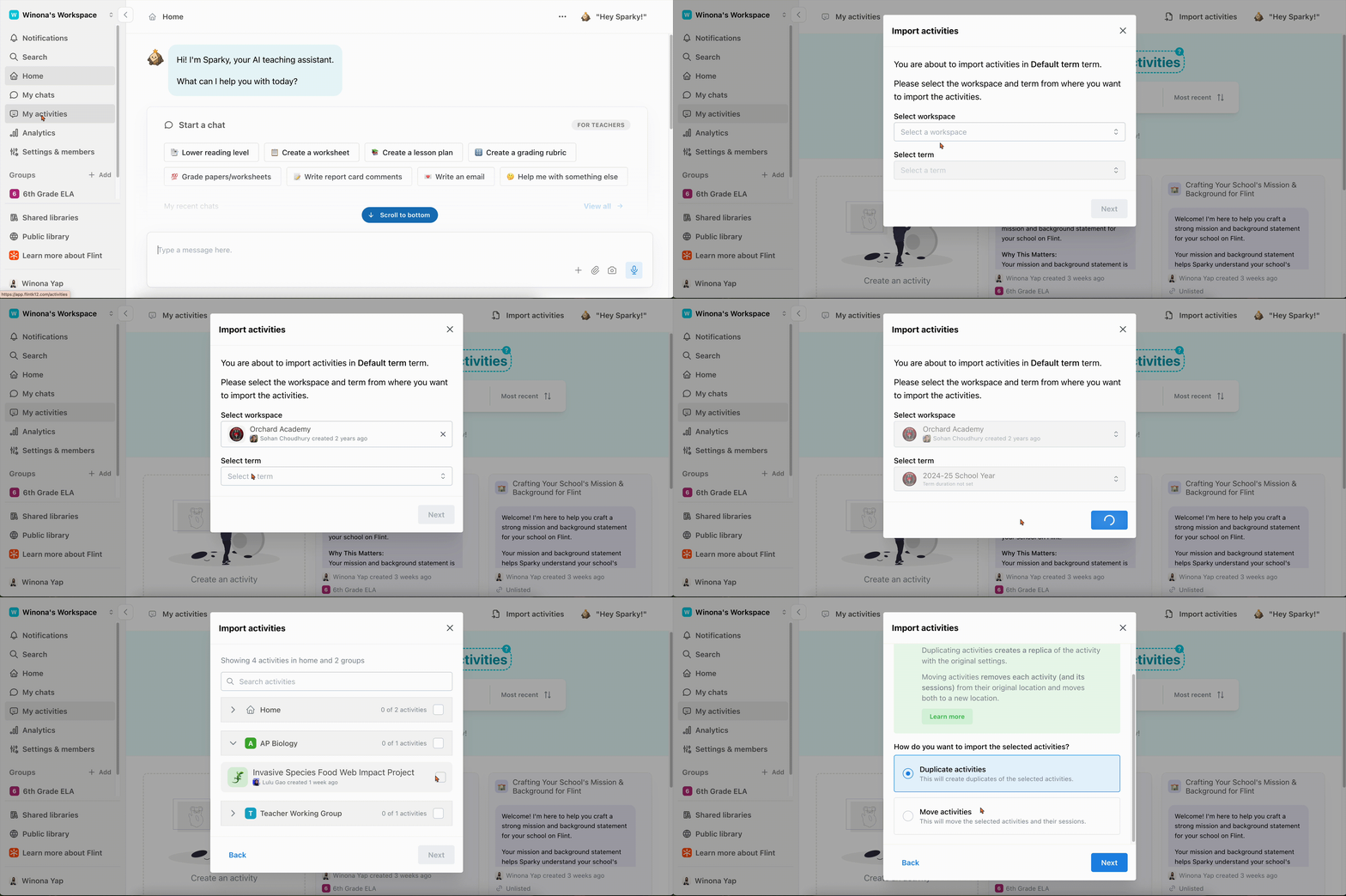
This recording predates the current design. The steps still run in this order, but the dialog is now titled Import content, the term's own activities sit under the term's name rather than "Home", and the access warning now reads "Some people may lose access".
Duplicating versus moving
- Duplicate copies the activity's content and most settings, without its sessions or submissions. The original stays where it is, with its work. Named sharing is not copied: a class copy starts open to that class, while a term copy starts available by link within its existing access boundaries. Check Share activity on the copy if it should be restricted. Assessment answer keys start hidden again.
- Move takes the activity out of its old home and brings its sessions and submissions with it. Flint warns you first: people who had access to the activity but are not in the destination class or term lose that access.
When importing into a class, you can tick a whole folder to copy it and its eligible activities. Empty folders and activities you do not individually own are not included. Folders are always copied, never moved, so the duplicate-or-move step is skipped. Activities copied as part of a whole folder start without a grade weight category; review their categories after import.
Moving activities from last term into this one
There is no separate flow for this — a term is just another source.
- Make sure you are in the term you want the activities to end up in. Select your school's name at the top of the sidebar; the Terms section shows the terms you can access, with a tick beside the current one. If a term is missing, see How to view a previous term in Flint.
- Start the import from your Activities page or from the class you want, as above.
- In Select term, choose the earlier term.
Duplicate a single activity into other classes
- Open the activity.
- Select Duplicate activity at the top of the page.
- Choose where the copies should go. The list offers the classes you can edit in your current term, plus the term itself, and you can pick several at once.
- If the activity has a grading rubric and a destination class uses grade weight categories, select Next and choose one for each copy under Choose grade weight categories.
- Select Duplicate.
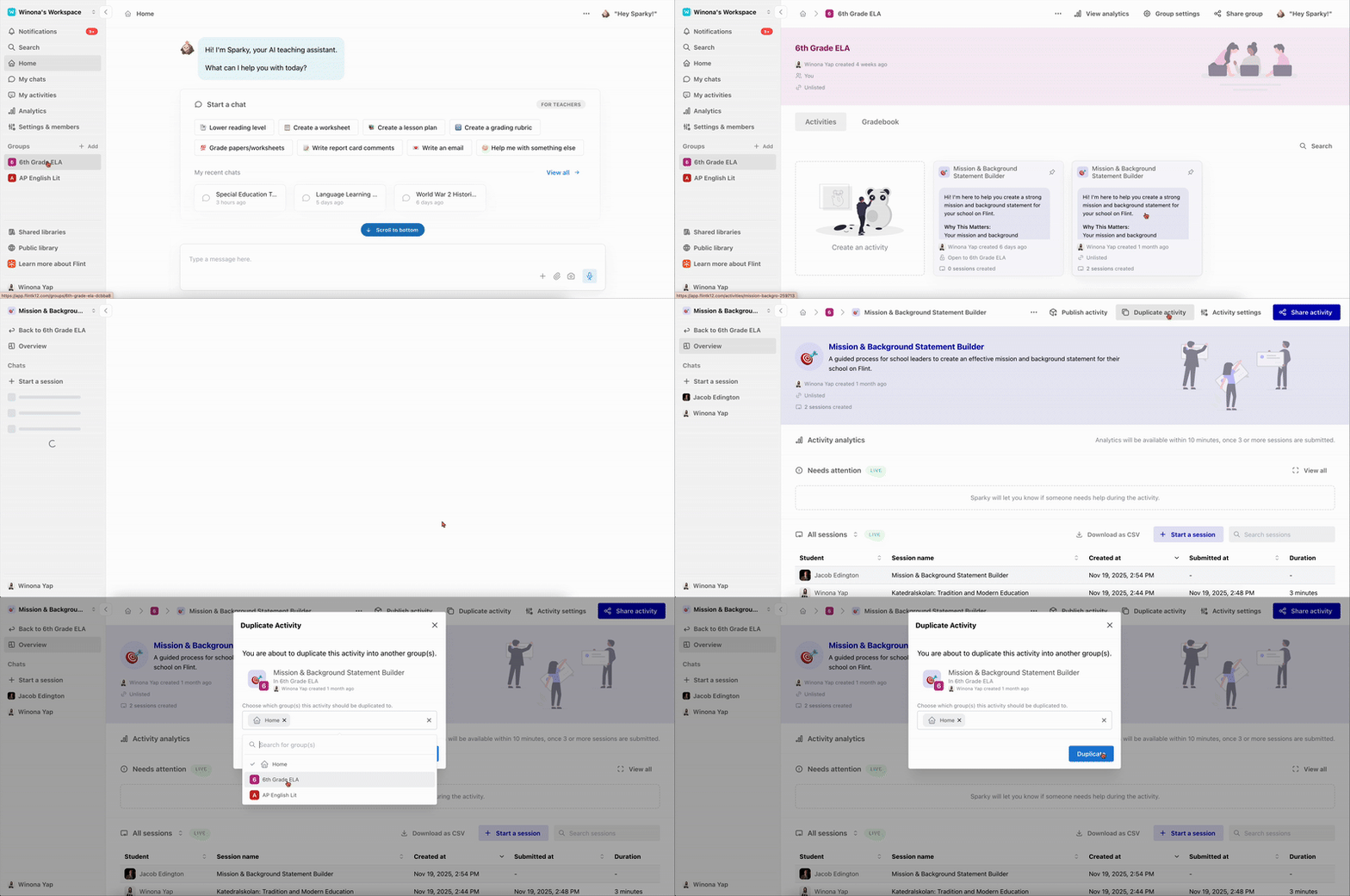
This recording predates the current design, so the surrounding screen looks different — the destination picker itself works as described above.
Each copy is a separate activity from then on: editing one does not change the others.
To copy an activity into a different school or term, use Import content instead — the destinations here are limited to your current term.