
An activity is a piece of work you build for your students — a chat with Sparky, a file-upload assignment, or an assessment with questions and submitted answers. Once it exists, its main controls live in one of two places:
- On the activity's own page. Open the activity. Along the top are Publish activity, Duplicate activity, Edit activity and Share activity, with Delete activity under the ⋯ More actions menu beside them.
- On the activity's card. In Activities, or in a class's Activities tab, click the ⋯ button on any card (Activity actions) for the same options plus Manage availability, Move to folder, Move to class and Pin to your class.
You see Edit activity, Publish activity and Delete activity only on activities you have Can edit access to. Anyone who can open an activity can use Share activity to copy its link, and anyone can duplicate an activity they found in a library.
Duplicate an activity
Duplicating gives you a second, independent copy. It is the right move when you want to run the same activity in another class, rework it while keeping the original intact, or hand a colleague a copy they can change without touching yours.
- Click Duplicate activity.
- In Duplicate Activity, choose one or more destinations — classes you can edit in your current term, or the term itself.
- Click Duplicate. If the button reads Next instead, a destination class uses grade weight categories and you'll pick one for each before the copy is made.
To copy across terms or schools, use Import content. School- and district-library activities remain restricted to destinations within their school or district.
Rename an activity
- Open the activity and click Edit activity.
- Click the pencil next to the activity's name at the top of the builder, type the new name and press Enter.
- Click Update activity, or Update assessment for an assessment.
The Name field in the activity thumbnail → Activity settings → Overview does exactly the same thing.
Share an activity
- Click Share activity.
- Type a name or email address into Add names or email addresses and click Invite.
- Choose what each person can do: Can participate lets them start a session or submission, subject to availability and attempt limits; Can edit lets them change the activity and see everyone's sessions or submissions.
- Click Done.
Copy link copies the activity's link to send by email or through your LMS, and Display join code shows a short code people can use to join instead. To change who can find the activity without being added, use General access in the same dialog — see How can I change the access permissions of an activity in Flint?.
Collaborate with a colleague
Share the activity and give them Can edit. They can then change its settings and see every session or submission — which is what you want for a co-taught class or an activity you are building together. Assessment questions that students have answered in submitted work have editing restrictions; see changing an existing activity.
If you'd rather they had their own version to change freely, duplicate the activity first and share the copy.
Pause an activity
Pausing freezes an activity without deleting anything. Teachers use it to open an activity at the start of a lesson and close it at the end, or to keep an activity locked until the class is ready.
- Open the activity and click Edit activity.
- Click the activity thumbnail, select Activity settings, then expand Assignment.
- Turn on Pause activity and click Update activity, or Update assessment for an assessment.
While an activity is paused, students cannot start or continue their work. Existing work stays readable. Turn the switch off to let them carry on, subject to the activity's dates and attempt limits.
Assessment attempts and results
Assessments allow one submitted attempt by default. In the activity thumbnail → Activity settings → Assignment, turn on Allow multiple attempts if students should be able to submit again.
Open a submitted assessment and finish scoring every answer. Select Share results at the top of the submission page, choose eligible students and confirm. Only completed, fully scored submissions with a student email address are eligible. Flint releases scores and teacher feedback and emails those students a link; students sign in to view their results.
Share answer key is a separate control on the assessment's page: it reveals the key and AI analysis to students who have submitted. Hide answer key hides those again without withdrawing shared scores and teacher feedback.
Publish to a library
A library is a collection of teacher-made activities anyone with access can browse and duplicate. Publishing yours shares the activity's settings — never any student work — and your name stays on it as the creator.
- Click Publish activity (or Publish to library on the card menu).
- Under Select where to publish this activity, tick each library you want: Public library, School library, and District library if your school shares one. You can pick more than one.
- Tick I confirm that this activity does not contain any sensitive, personal, or copyrighted content.
- Click Publish.
If you have published the activity to a selected library before, publishing again updates that library's existing version. Select Publish a duplicate of this activity for a separate version instead. Editing the original alone does not update the published copy.
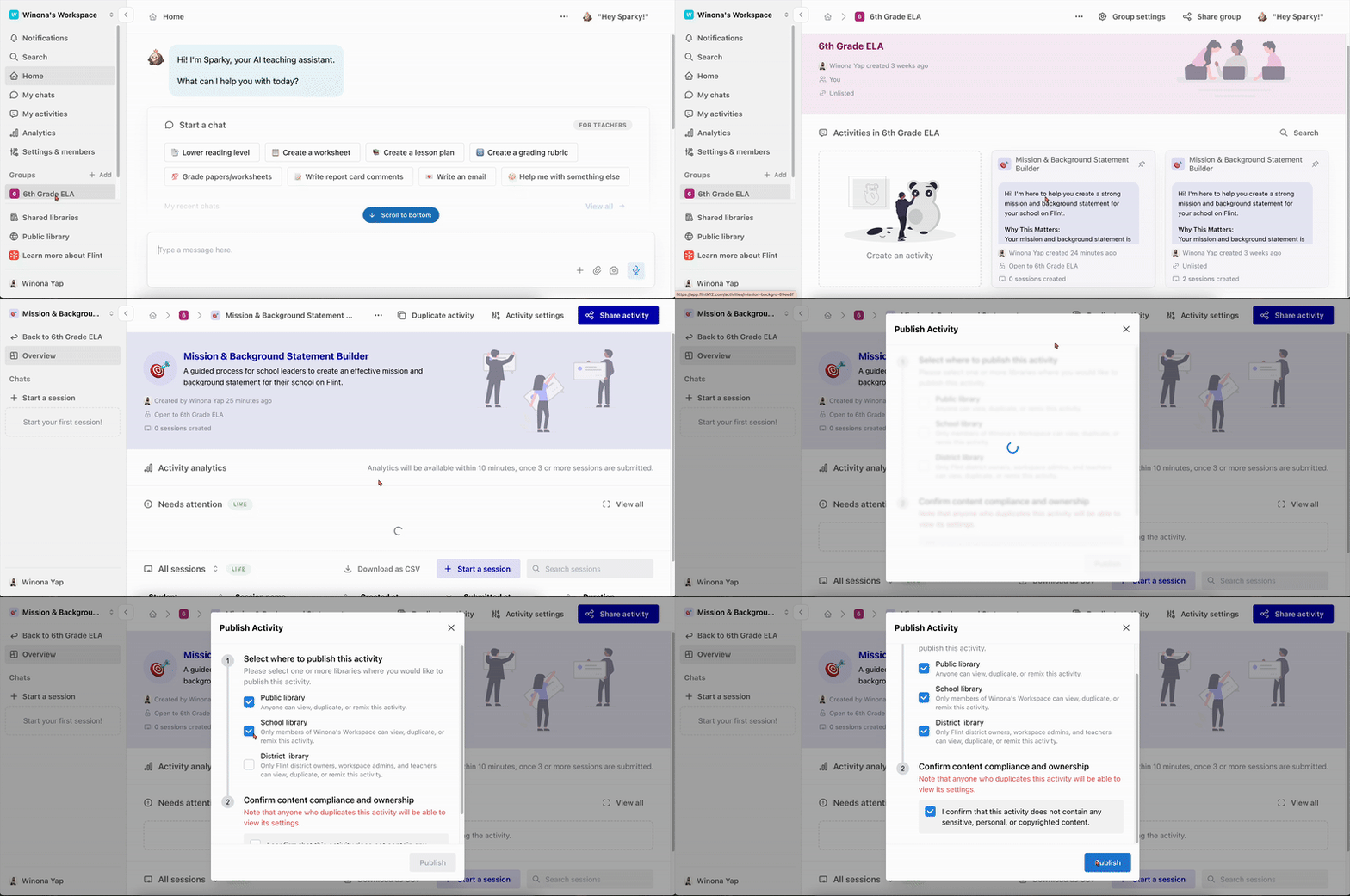
The recording predates the current design. The School library option still has the same name; its description now names your school rather than a workspace. The recording shows the selections and enabled Publish button, not a completed publication.
Anyone who duplicates a published activity can read its settings, so take a moment to check nothing private is sitting in the guidelines. To take it down again, see How to remove an activity from the library.
Delete an activity
- Open the activity and click ⋯ More actions, then Delete activity.
- Type the activity's name into the box to confirm, then click Yes.
Deleting an activity also deletes its sessions and submissions, and it cannot be undone. Shared links to documents, slides or other artifacts generated in that activity also stop working. Copies of those artifacts published to a library keep working. If you only want the activity out of the way for now, pause it or move it instead.